
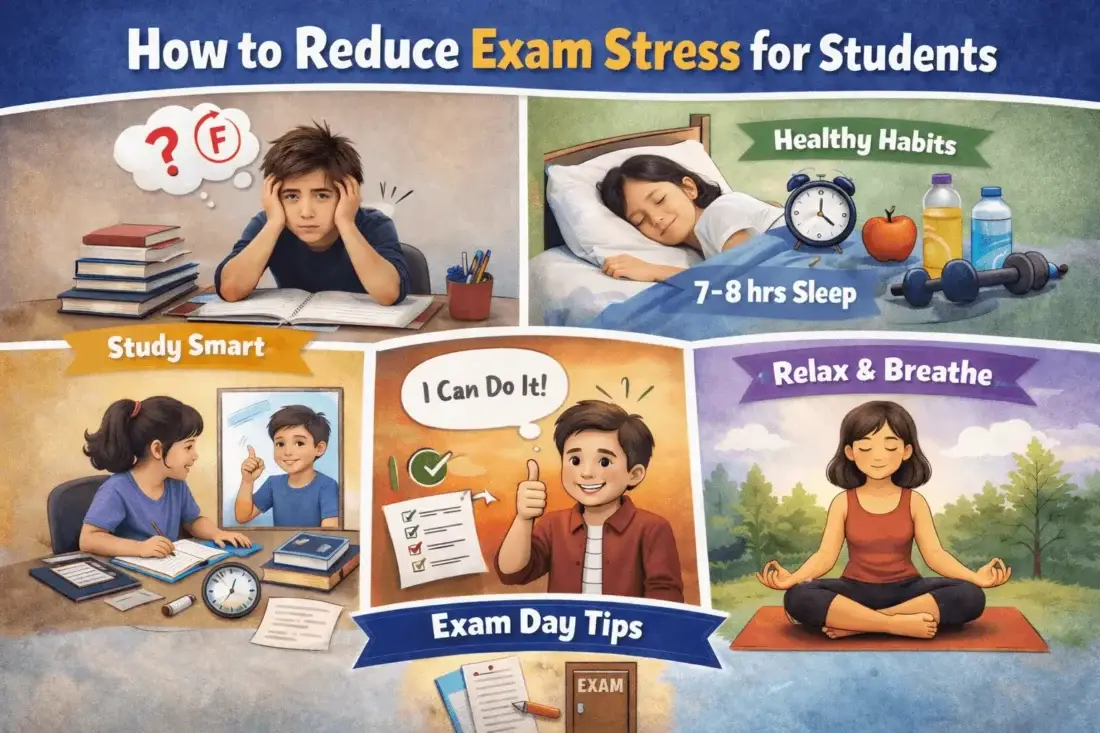
Introduction
Exams often bring pressure, anxiety, and self-doubt. Whether a student is preparing for board exams, competitive exams, or school assessments, exam stress can affect focus, memory, and overall performance. In many cases, students feel overwhelmed not because they lack ability, but because they lack the right strategies to manage stress.
The good news is that exam stress can be reduced with simple, practical steps. When students learn how to manage time, organize their studies, and take care of their mental health, they perform better and feel more confident.
In this blog, we will explore effective and realistic ways to reduce exam stress for students. These techniques are easy to follow and can make a noticeable difference in both preparation and performance.
Understand the Root Cause of Exam Stress
Before trying to reduce stress, it is important to understand what causes it. Many students experience anxiety due to:
Fear of failure
High parental or self-expectations
Poor time management
Lack of preparation
Comparing themselves with others
Sometimes, stress grows because students focus too much on results instead of preparation. When attention shifts from “What if I fail?” to “What can I do today to improve?”, stress naturally decreases.
Practical Tip: Write Down Your Worries
Take five minutes and list your exam-related worries. Then, next to each worry, write one action step.
For example:
“I am scared of maths.” → Solve 10 practice problems daily.
“I might forget answers.” → Revise with short notes every evening.
This simple exercise turns fear into action.
Create a Realistic Study Plan
One of the biggest reasons for exam stress is last-minute preparation. When students try to complete everything in a short time, anxiety increases.
Instead, create a structured and realistic study schedule.
How to Build an Effective Study Plan
Break the syllabus into smaller topics.
Assign daily study targets.
Include revision time every week.
Add short breaks between sessions.
Keep one day flexible for backlog topics.
A study plan should feel achievable. If the timetable looks too strict, students often give up quickly. Therefore, balance is key.
Use the 50-10 Rule
Study for 50 minutes with full concentration. Then take a 10-minute break. During the break:
Stretch your body
Drink water
Take a short walk
Short breaks refresh the brain and improve retention.
When preparation becomes organized, stress automatically reduces.
Improve Preparation with Smart Study Techniques
Hard work is important, but smart work reduces pressure. Students often spend long hours reading without effective results. This increases frustration.
Instead, use active learning techniques.
1. Practice Active Recall
After studying a topic, close the book and try to recall key points. Write them down. This strengthens memory and builds confidence.
2. Use the Pomodoro Technique
Set a timer for 25 minutes and focus completely. After four sessions, take a longer break. This method improves productivity and prevents burnout.
3. Solve Previous Year Question Papers
Practice builds familiarity. When students solve previous exam papers:
They understand the exam pattern.
They learn time management.
They reduce fear of the unknown.
Confidence grows when the exam format feels familiar.
4. Revise Regularly
Many students prepare well but forget due to lack of revision. Plan weekly revision sessions. Even 30 minutes of recap can prevent last-minute panic.
Take Care of Your Physical and Mental Health
Stress does not only affect the mind. It also impacts sleep, appetite, and energy levels. Therefore, maintaining physical health is essential during exams.
Sleep Is Non-Negotiable
Students often sacrifice sleep to study more. However, lack of sleep reduces memory and concentration.
Aim for:
7–8 hours of sleep daily
A consistent bedtime routine
Avoiding mobile screens before sleep
A well-rested brain performs better than a tired one.
Eat Balanced Meals
Avoid excessive junk food and caffeine. Instead, choose:
Fruits and vegetables
Nuts and dry fruits
Home-cooked meals
Plenty of water
Proper nutrition keeps energy stable and prevents mood swings.
Practice Relaxation Techniques
Simple relaxation techniques can reduce anxiety instantly.
Deep breathing for 5 minutes
Light stretching or yoga
Listening to calm music
Short meditation sessions
Even five minutes of mindful breathing before studying can improve focus.
Build a Positive Mindset
Exam stress often comes from negative self-talk. Thoughts like “I can’t do this” or “I will fail” increase anxiety.
Instead, train your mind to think positively.
Maintaining a positive attitude helps students stay motivated during exams. If you sometimes feel low or distracted, you can also read our detailed guide on how to stay motivated during board exam preparation to rebuild focus and confidence.
Replace Negative Thoughts
Negative: “The syllabus is too big.”
Positive: “I will complete one chapter at a time.”
Negative: “Others are better than me.”
Positive: “I am improving every day.”
Small changes in thinking create big changes in confidence.
Avoid Comparison
Every student learns at a different pace. Comparing marks, speed, or preparation with others increases stress.
Focus on your personal growth. Track your improvement weekly instead of comparing with classmates.
Celebrate Small Wins
Completed a chapter? Reward yourself with a short break.
Improved your mock test score? Acknowledge the progress.
Recognizing improvement motivates consistent effort.
Manage Exam Day Anxiety
Even well-prepared students feel nervous on exam day. However, the right approach can control anxiety.
Before the Exam
Revise short notes only.
Avoid discussing difficult topics with friends.
Reach the exam center early.
Take deep breaths.
Do not try to learn new topics at the last moment. Instead, focus on staying calm.
During the Exam
Read the question paper carefully.
Start with questions you know well.
Manage time wisely.
Do not panic if you do not know one answer.
Remember, one difficult question does not decide the entire result.
After the Exam
Avoid overthinking mistakes. Once the paper is done, shift focus to the next subject. Overanalysing increases unnecessary stress.
Manage Exam Day Anxiety
Sometimes, stress becomes overwhelming. If a student experiences:
Constant anxiety
Panic attacks
Severe sleep problems
Loss of appetite
Lack of motivation
It may be helpful to speak to:
Parents
Teachers
Mentors
School counselors
Asking for help is a sign of strength, not weakness.
Additionally, joining a structured coaching environment can reduce stress. When students receive guided preparation, regular testing, and expert mentorship, they feel more confident and organized.
Manage Exam Day Anxiety
Here is a simple daily routine students can follow:
Morning:
Light exercise or stretching
Quick revision of key formulas or concepts
Afternoon:
Focused study sessions with short breaks
Practice questions
Evening:
Revision of what was studied
Relaxation time
Early sleep
Consistency matters more than intensity. A steady routine reduces uncertainty and builds confidence.
Conclusion
Exam stress is common, but it does not have to control your performance. With proper planning, smart study techniques, healthy habits, and a positive mindset, students can reduce anxiety significantly.
Preparation should focus on progress, not perfection. When students stay consistent and organized, confidence grows naturally. Remember, exams test knowledge, not your worth.
If you are preparing for upcoming exams and need structured guidance, regular mock tests, or personalized mentoring, explore BRP Tuition’s academic support programs to strengthen your preparation with expert guidance.
Frequently Asked Questions
What causes exam stress in students?
Exam stress is usually caused by fear of failure, high expectations, poor time management, lack of preparation, and comparison with others. When students feel unprepared or pressured, anxiety increases.
How can students reduce exam stress naturally?
Students can reduce exam stress naturally by creating a study schedule, practicing regular revision, getting enough sleep, eating healthy meals, and using relaxation techniques like deep breathing or meditation.
Does proper time management help reduce exam anxiety?
Yes, effective time management plays a major role in exam stress management. When students plan their syllabus properly and avoid last-minute cramming, they feel more confident and less anxious.
How many hours should a student sleep during exams?
Students should aim for 7–8 hours of sleep during exam preparation. Proper sleep improves memory, concentration, and overall mental health, which reduces stress levels.
What are the best study techniques to stay calm before exams?
Active recall, solving previous year question papers, weekly revision, and the Pomodoro technique are effective study methods that improve preparation and reduce exam anxiety.
How can parents help children manage exam stress?
Parents can help by creating a supportive environment, avoiding unnecessary pressure, encouraging healthy routines, and appreciating effort instead of focusing only on results.
When should a student seek help for exam stress?
If a student experiences constant anxiety, sleep problems, panic attacks, or loss of motivation, it is important to speak to parents, teachers, or a counsellor for proper guidance.